
Read The
Current Issue
By Samantha Nock // Photography by Paulette Phlipot
—
I
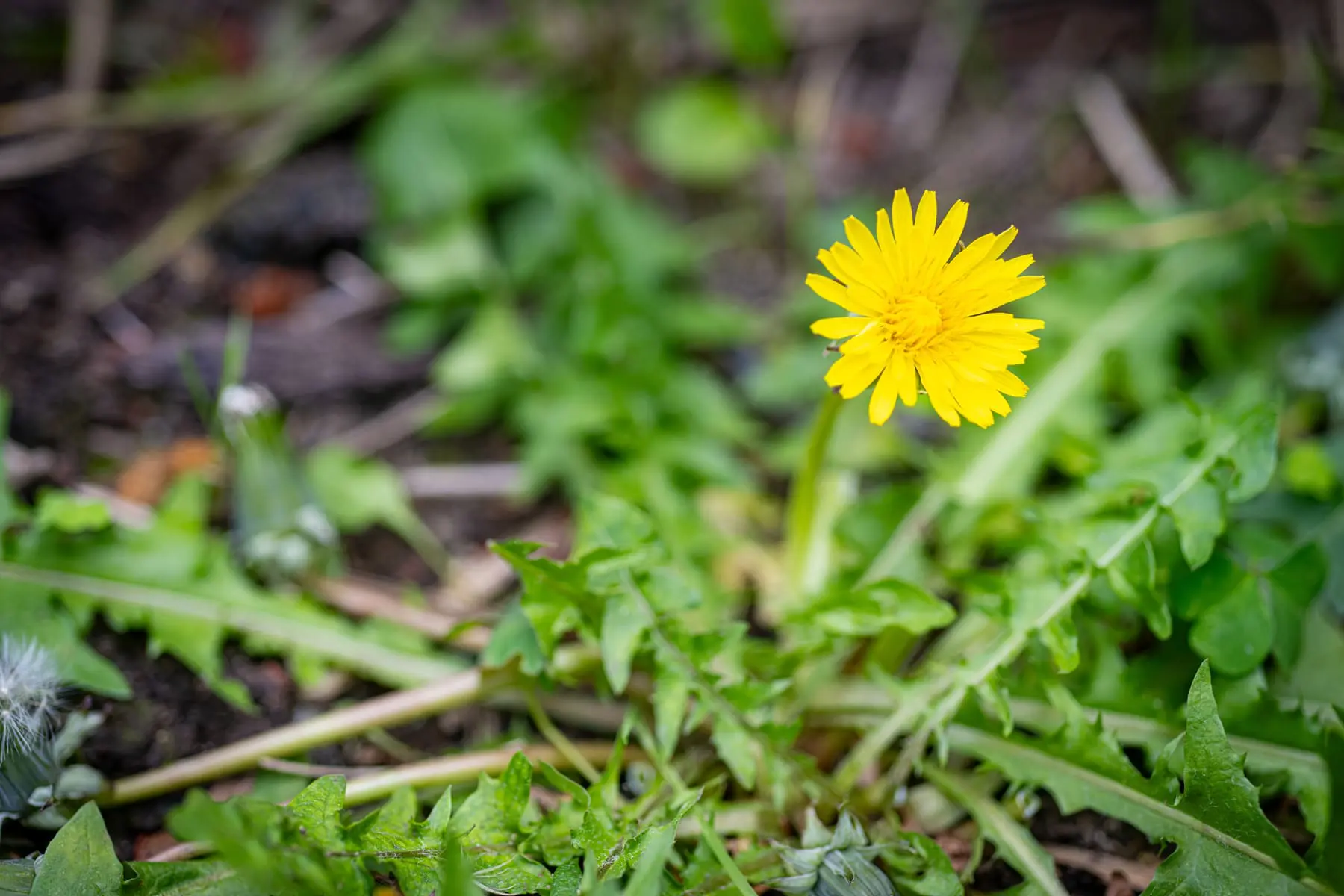
t’s a warm, sunny day in the Tetons. I step outside to soak up the sunshine and enjoy a relaxing moment in the yard with my tea while my children run around. I’m greeted by a sea of dandelions — bright yellow blooms scattered across the entire yard. Everywhere. For a second, I catch myself thinking, I really need to deal with these weeds.
But then I see these flowers the way my children do.
To them, the yard isn’t overrun; it’s abundant. Through their eyes, the bright yellow blossoms are full of endless possibilities: bouquets for mama, crowns for imaginary kingdoms, and wishes waiting to be blown into the wind. What some call pesky is, in fact, wildly generous.
This shift in perspective is exactly why I’ve become excited about dandelions — not just for their beauty and imagination, but for what they offer nutritionally. These treasures are far more than just weeds or wildflowers. They’re a powerhouse of nourishment hiding in plain sight.


Every part of a dandelion is useful. The leaves — best eaten when young and tender — are rich in vitamins A, C, and K, as well as iron and calcium. The flowers, which taste surprisingly mild and slightly sweet, are high in vitamin C. According to a Pub Med Central study, New Perspectives on the Effect of Dandelion, Its Food Products and Other Preparations on the Cardiovascular System and Its Disease, even the roots have long been used to support digestion and liver health. The study also notes that dandelions are rich in antioxidants, too, such as beta-carotene and polyphenols, which help protect the body from everyday cellular damage and support long-term health. As I learned more, it became clear that dandelions aren’t just “good for you” in a vague sense; they’re incredibly dense in nutrients.
What really surprised me, though, is how functional they are to the body. Dandelions contain anti-inflammatory properties, thanks to compounds like sesquiterpene lactones found in the root. They’ve also been used for generations in traditional medicine to aid digestion. The root is a rich source of inulin, a type of prebiotic fiber that promotes the growth of beneficial gut bacteria, alleviates constipation, and keeps the digestive system running smoothly, according to healthline.com.
And then there’s dandelion’s role in supporting the body’s natural detox systems. They act as a natural diuretic, helping the body flush excess fluids and toxins through the kidneys and liver. At the same time, the bitter compounds in the root can stimulate bile production, further supporting liver function and detoxification. It’s the kind of quiet, steady support that feels especially valuable in a world where we’re constantly exposed to more than our bodies are designed to handle.
Dandelions are incredibly versatile in the kitchen, too, and once you get past the idea that they are “just weeds,” a whole new category of food opens up. The leaves can be eaten raw in salads (young leaves are less bitter) or cooked like spinach in soups and stir-fries. The sweet flower can be added to salads, made into wine, syrup, or jellies, and even fried as fritters. And the roots? They can be dried, roasted, and ground to use as a caffeine-free coffee substitute or brewed into a nourishing tea.
Now, when I step outside and see my yard covered in dandelions, I don’t feel the same urge to get rid of them. Instead, I see a plant full of nourishment, resilience, and endless possibilities. I see a gift that asks for nothing and gives generously in return. And often, I see my kids with their hands full of yellow blooms, reminding me that sometimes the things we overlook are the very things worth getting excited about.
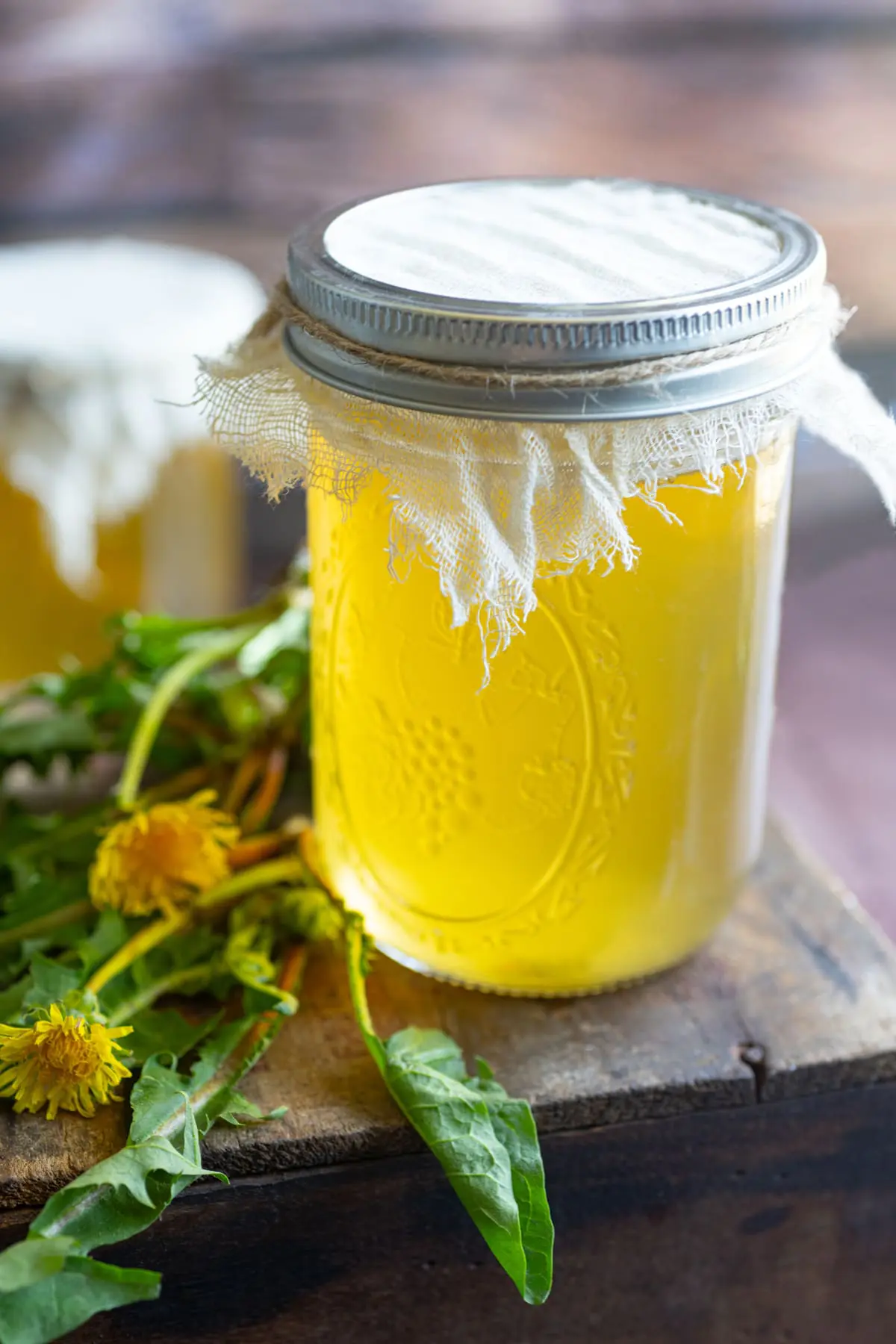
Dandelion Jelly
—
Makes 4 small jars
This jelly is like sunshine in a jar — luscious and yellow with a floral honey taste.
—
3 packed cups dandelion flower heads, washed
4 cups water
1 half lemon, juiced
1 package jam pectin (28.5 grams)
4 cups sugar
- Pull the petals from the flower heads and discard the green parts.
- Place the flower petals in a heatproof bowl and cover them with boiling water. Steep for at least 3 hours and up to 24 hours.
- Strain the water into a large saucepan, add the lemon juice and jam pectin, and bring it to a boil. Add the sugar and continue to boil the mixture for a few minutes.
- Use the “cold plate” test to check the consistency of your jelly. Place one teaspoonful of hot jelly on a frozen plate and lightly drag a finger through it; if the surface wrinkles and the trail left by your finger doesn’t fill in, it’s ready for canning.
- Pour the jelly into sterilized preserving jars, then seal the jars with lids and place them in a canning bath. Cover the jars with water and bring it to a boil for 15 minutes.
- Carefully remove the jars from the bath and place them on a wooden chopping board to cool.
For Best Results + Safety:
- Pick flowers in areas that haven’t been exposed to fertilizers, herbicides, or car emissions.
- Harvest fully open flowers at midday.
- Use the flowers immediately to preserve the fresh aroma.
Recipe adapted from Lucy Mora, The Kitchen Garden
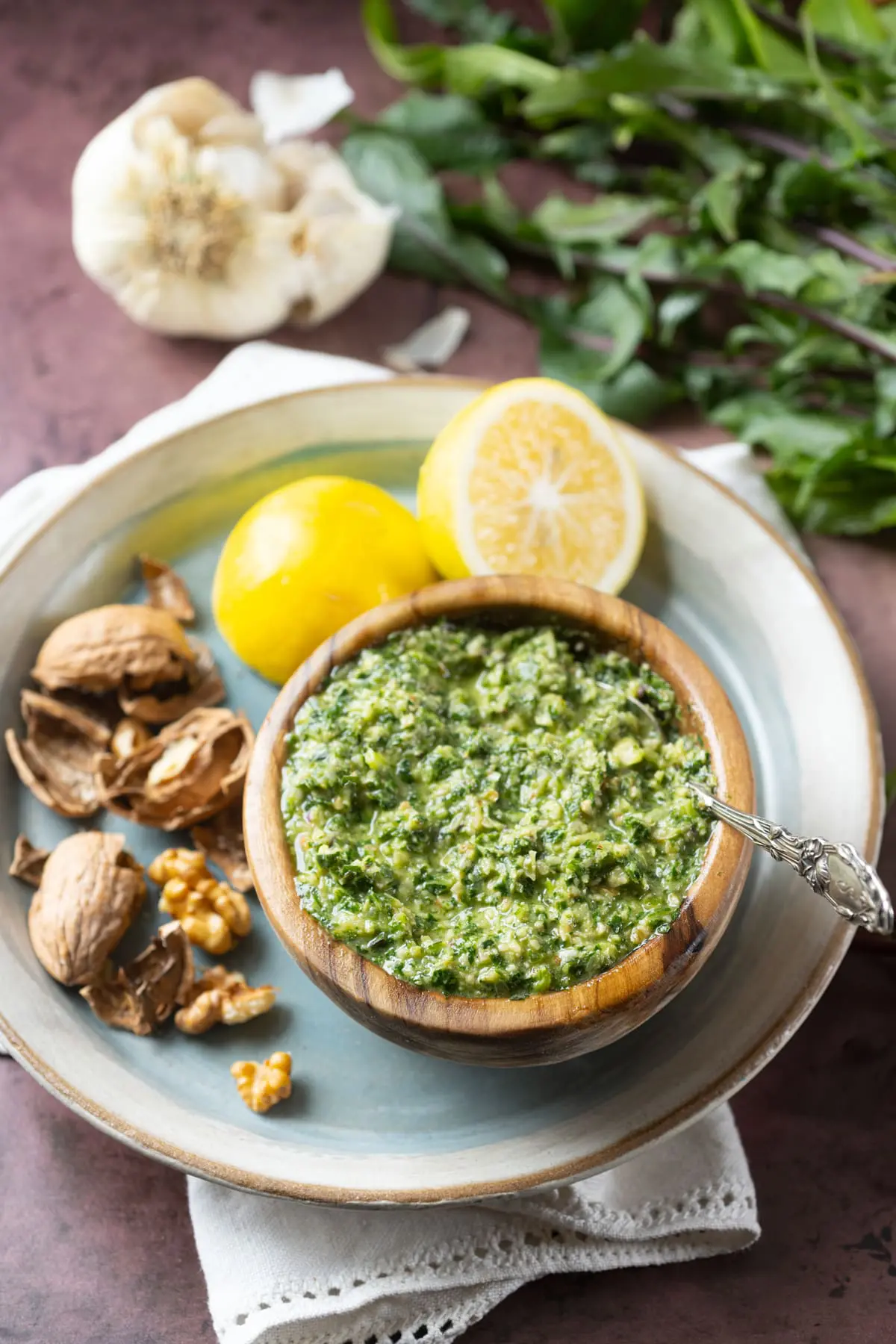
Dandelion Greens Pesto
—
Makes 1 batch
For this recipe, it’s best to use tender young leaves.
—
2 cups chopped young dandelion greens
1/2 cup walnuts or pine nuts
3 cloves garlic
1/2 lemon, juiced
1/2 cup olive oil
1/2 teaspoon salt
1/2 teaspoon freshly ground black pepper
1/2 cup grated Parmesan cheese
- Place all ingredients, except the cheese, into a food processor or blender; process until combined, adding more olive oil bit by bit as needed to reach your desired consistency
- Add the cheese and continue to blend.
- Refrigerate, and eat within 3 days. You can also freeze the pesto in ice cube trays for later use.
For a less bitter taste:
Blanch the greens for 1 minute in boiling water, and then plunge them into an ice bath and pat them dry before blending.
Recipe adapted from Rosalee de la Forêt, Alchemy of Herbs
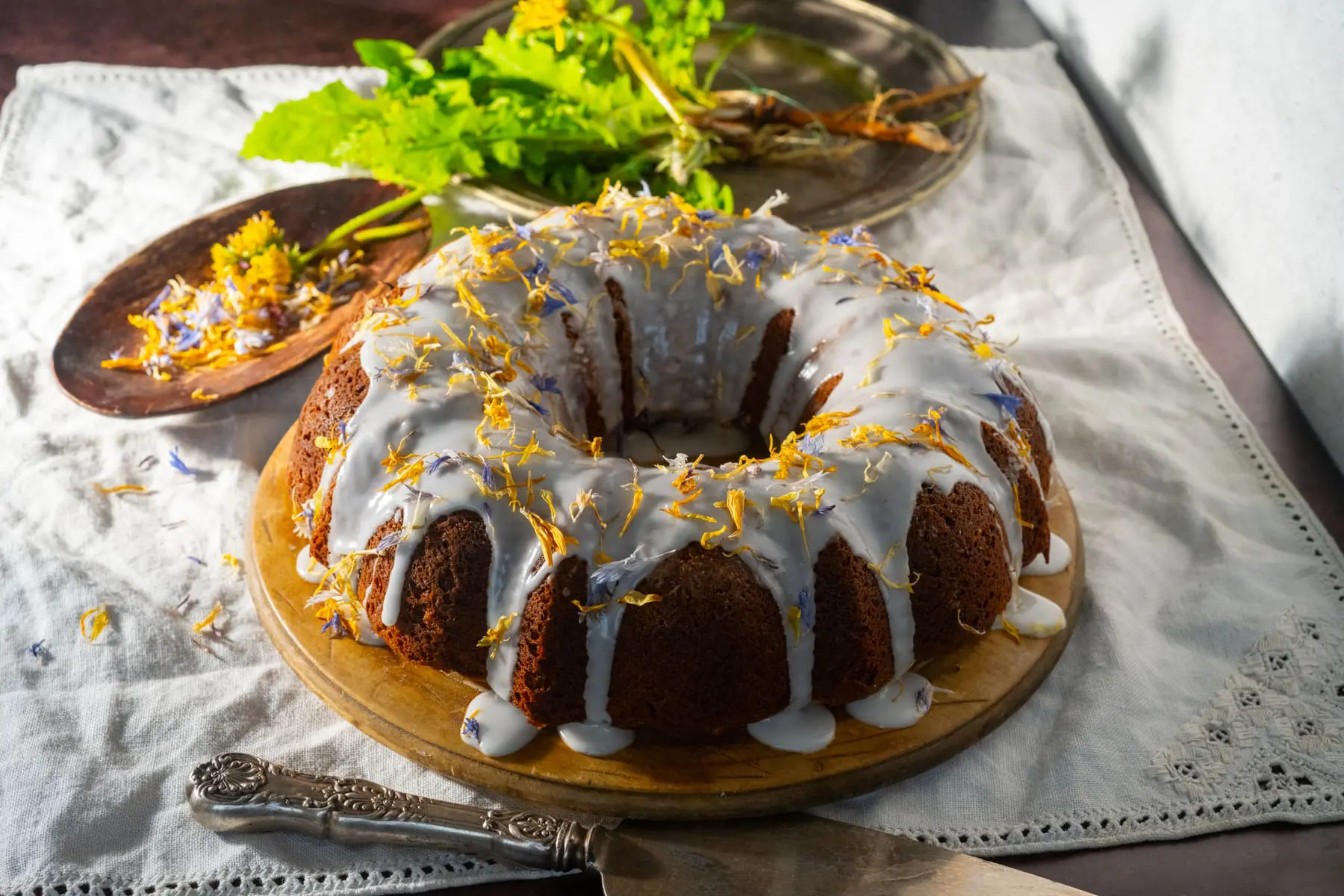
Dandelion Root Cake
—
Makes one bundt cake
This is a fun twist on a classic carrot cake, except you use wild foraged dandelion roots instead of carrots. The result is a rustic, woodland-style dessert — earthy, warmly spiced, and subtly sweet.
—
For the Cake:
1 3/4 cups all-purpose flour
2 teaspoons baking powder
1 teaspoon baking soda
2 teaspoons ground cinnamon
1/2 teaspoon ground nutmeg
1 pinch ground cloves
1/2 teaspoon salt
1/2 cup honey
3/4 cup vegetable oil or melted butter
1 large egg
1 tablespoon vanilla extract
2 cups peeled and grated dandelion roots
Dried or edible flowers to decorate
- Preheat the oven to 350°F.
- Prepare the dandelion roots by washing them thoroughly, then peeling them to completely remove the outer layer. Grate the prepared roots with a coarse grater.
- Mix the dry ingredients in a bowl and set it aside.
- In another bowl, mix the wet ingredients (except the dandelion roots), and then add them to the dry ingredients. Stir to combine.
- Add the peeled, grated dandelion roots, and stir to incorporate.
- Grease a bundt pan and pour the batter into the prepared pan.
- Bake the cake for 25 to 35 minutes, until it is fully cooked or until a toothpick inserted into the center comes out clean.
- Remove cake from the oven and cool for about 10 minutes before turning it onto a cooling rack. Cool completely before pouring icing on top of the cake.
For the Lemon Glaze:
1 cup powdered sugar
2 to 3 tablespoons fresh lemon juice
- In a medium bowl, combine the powdered sugar and 2 tablespoons of lemon juice. Whisk to combine, adding more lemon juice as needed to create a smooth, pourable glaze.
- Drizzle glaze over cake.
- Top with fresh or dried edible flowers.
For Best Results:
- Soak dandelion roots in the sink to get as much dirt off as possible before peeling and grating them.
- Use a sharp peeler to remove the remaining dirt and the bitter outer layer.
Recipe adapted from America’s Test Kitchen’s honey carrot cake recipe